
The Historical Landmarks of Makkah
Ziyarah

Manuscript one of two

The Historical Landmarks of Makkah

An illustrated guide to the places, people and events that shaped Islamic history.

14 locations

Makkah Al-Mukarramah

Makkah is the city in which the final Messenger of Allah, Muhammad ﷺ, was born and where the revelation of the Qur'an began.

It is the home of the Ka'bah, the first House established for the worship of Allah, and the destination towards which Muslims turn in prayer throughout the world.

Makkah witnessed the earliest struggles of Islam: the first revelation, the persecution of the Muslims, the migration to Abyssinia, the Hijrah to Madinah, the Treaty of Hudaybiyyah and eventually the conquest of Makkah.

A visit to its historical landmarks is an opportunity to understand these events more deeply, reflect upon the sacrifices of the early Muslims and appreciate the history behind the places surrounding the Haram.

This guide explores the principal historical sites associated with Makkah and its surroundings.

01

Al-Masjid Al-Haram and the Ka'bah

المسجد الحرامThe Sacred Mosque Central Makkah
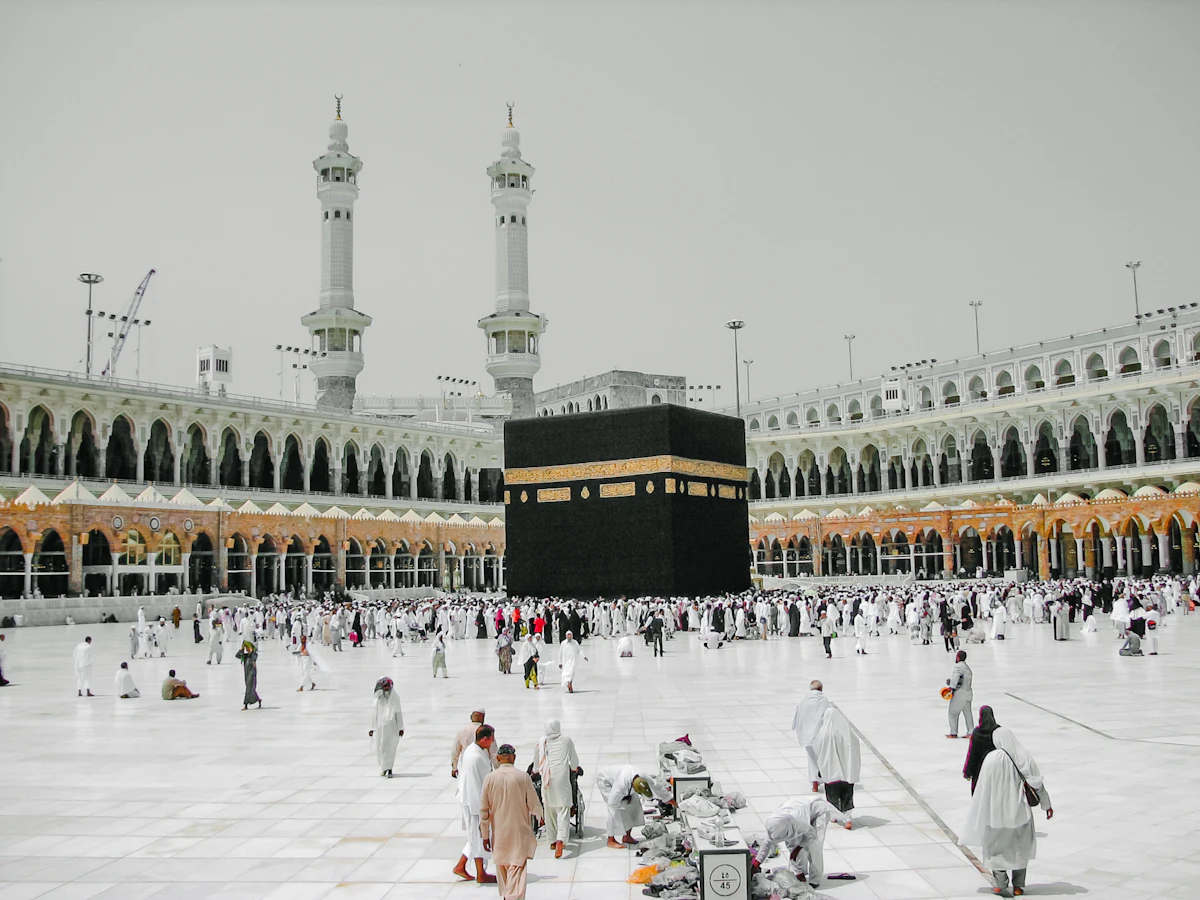
Al-Masjid Al-Haram and the Ka'bah

Al-Masjid Al-Haram is the holiest mosque in Islam and surrounds the Ka'bah, the direction towards which Muslims face in their daily prayers.

The Ka'bah is associated with Prophet Ibrahim عليه السلام and his son Prophet Ismail عليه السلام, who raised its foundations by the command of Allah.

Allah says:

“And when Abraham was raising the foundations of the House and Ishmael...”

Qur'an 2:127

The Ka'bah has undergone various reconstructions and restorations throughout history. Its present structure is the result of successive historical developments.

Historical significance

  • The Ka'bah is the focal point of Muslim prayer.
  • It is the destination of Hajj and Umrah.
  • Prophet Ibrahim and Prophet Ismail are associated with its foundations.
  • The Prophet Muhammad ﷺ restored the Ka'bah's status as the centre of pure monotheistic worship.
  • The conquest of Makkah in 8 AH witnessed the removal of idols from around the Ka'bah.

What to explain to pilgrims

Explain the history of Prophet Ibrahim, Hajar and Ismail, the establishment of the House, the importance of Tawhid and the significance of the Ka'bah in the life of every Muslim.

Important

Important: There are no prescribed rituals for touching the Ka'bah's walls, kissing its covering or visiting particular corners beyond established Sunnah practices.
Open this location
02

Jabal Al-Noor and the Cave of Hira

جبل النور – غار حراءMountain of Light – Cave of Hira North-east of the Grand Mosque
Jabal Al-Noor and the Cave of Hira

One of the most significant historical landmarks in the entire Islamic world.

Jabal Al-Noor is located northeast of the Grand Mosque. The mountain is particularly famous for containing the Cave of Hira, where the first revelation of the Qur'an descended upon Prophet Muhammad ﷺ.

The events of the first revelation

Before receiving revelation, the Prophet ﷺ would retreat to the Cave of Hira for periods of worship and contemplation.

During one of these retreats, Angel Jibril عليه السلام appeared to him and commanded him to read.

The first revealed verses were:

اقْرَأْ بِاسْمِ رَبِّكَ الَّذِي خَلَقَ

“Read in the name of your Lord who created.”

Qur'an 96:1

The Prophet ﷺ was deeply affected by this extraordinary encounter and returned to his wife Khadijah رضي الله عنها.

She comforted him and took him to her relative Waraqah ibn Nawfal, who recognised the significance of the encounter.

Why this location matters

The Cave of Hira marks the beginning of the revelation of the Qur'an and the beginning of the Prophet's mission as the final Messenger.

It represents:

  • The beginning of Prophethood.
  • The importance of knowledge and revelation.
  • The beginning of the Qur'anic message.
  • The transition from the pre-Islamic period to the age of revelation.

What pilgrims should understand

The importance of this location is its historical connection to the first revelation. Climbing the mountain or entering the cave is not a requirement of Umrah, nor is there an established special prayer or du'a prescribed specifically for the cave.

Practical visiting information

  • The ascent is steep and physically demanding.
  • The route contains uneven rocky sections.
  • It may be unsuitable for elderly pilgrims, children and people with mobility or health concerns.
  • Heat and dehydration can make the climb particularly dangerous.
  • Access arrangements and opening conditions should be checked before visiting.

The Hira Cultural District at the foot of the mountain provides an alternative opportunity to learn about the revelation without undertaking the climb.

Open this location
03

Jabal Thawr and the Cave of Thawr

جبل ثور – غار ثورMount Thawr – Cave of Thawr South of Makkah
Jabal Thawr and the Cave of Thawr

Jabal Thawr is located south of Makkah and is historically associated with one of the most important events in the life of Prophet Muhammad ﷺ: the Hijrah.

The story of the Hijrah

When the Quraysh plotted to assassinate the Prophet ﷺ, Allah instructed him to migrate from Makkah to Madinah.

He departed with his closest companion, Abu Bakr al-Siddiq رضي الله عنه.

Rather than travelling directly north towards Madinah, they initially travelled south and sought refuge in the Cave of Thawr.

They remained in the cave for three nights while the search party of Quraysh searched for them.

Abdullah ibn Abi Bakr brought them information, while Asma bint Abi Bakr رضي الله عنها brought provisions.

Their journey was supported by the careful planning and trust in Allah demonstrated by the Prophet ﷺ.

The Qur'an describes the moment:

“Do not grieve; indeed Allah is with us.”

Qur'an 9:40

Historical lessons

This location teaches pilgrims about:

  1. 1Tawakkul – placing one's trust in Allah.
  2. 2Courage – remaining steadfast in the face of danger.
  3. 3Companionship – the extraordinary loyalty of Abu Bakr.
  4. 4Planning – taking the necessary means while relying upon Allah.
  5. 5Sacrifice – leaving one's homeland for the sake of faith.

Visiting guidance

The mountain is considerably challenging to climb. The cave is situated high above the surrounding area.

A visit from the base of the mountain is sufficient to explain the history.

Important

Do not encourage elderly pilgrims or those with health concerns to climb. Official local information has described the site as being under development, so check access arrangements before scheduling a visit.

Open this location
04

Mina

منىMina East of Makkah
Mina

Mina is one of the principal sacred sites of Hajj.

It is located between Makkah and Muzdalifah and is famous for its vast tent city, which accommodates millions of pilgrims during Hajj.

Its significance

Mina is associated with several important Hajj rites:

  • Spending the days of Tashreeq.
  • Stoning the Jamarat.
  • The sacrifice associated with Hajj.
  • The days of remembrance and worship during the pilgrimage.

The events of Prophet Ibrahim's willingness to sacrifice his son, and the rejection of Satan's attempts to divert him, are central to the meaning of the sacrifice and the rites of Hajj.

Masjid Al-Khayf

Located in Mina, Masjid Al-Khayf is a historic mosque associated with the Prophets who worshipped in this region.

It is especially associated with the Hajj landscape and the history of the Prophets.

What pilgrims should understand

Mina is not simply a campsite. It is a place associated with obedience, sacrifice, remembrance and the completion of the Hajj pilgrimage.

Umrah pilgrims visiting outside Hajj should understand that they are visiting a historical and geographical site, not performing the rites of Hajj.

Open this location
05

Jamarat Bridge

جسر الجمراتJamarat Bridge Mina
Jamarat Bridge

The Jamarat complex is situated in Mina.

It is the location where Hajj pilgrims perform the ritual stoning of the Jamarat during the days of Hajj.

The historical background

The ritual is associated with Prophet Ibrahim عليه السلام and his rejection of Satan's attempts to dissuade him from obeying Allah.

The stoning symbolises obedience to Allah and rejection of Satan's temptation.

Modern development

The Jamarat Bridge has undergone extensive development to safely accommodate the enormous number of Hajj pilgrims.

The modern complex consists of multiple levels designed to manage large crowds.

Important

Important distinction: The Jamarat ritual belongs to Hajj. Visitors undertaking ordinary Umrah should not attempt to perform the stoning ritual.

Open this location
06

Arafat and Jabal Al-Rahmah

عرفات – جبل الرحمةArafat – Mount of Mercy Outside Makkah
Arafat and Jabal Al-Rahmah

Arafat is located outside Makkah and is one of the most important locations in the Hajj pilgrimage.

The Prophet ﷺ said:

“Al-Hajj Arafah.”

Reported in Sunan Abu Dawud and others

This hadith highlights the central importance of standing at Arafat during Hajj.

The Day of Arafah

On the ninth day of Dhul Hijjah, Hajj pilgrims gather at Arafat to stand in worship, make du'a, seek forgiveness and remember Allah.

It is one of the defining moments of Hajj.

Jabal Al-Rahmah

Mount Al-Rahmah is a small rocky hill within the plain of Arafat.

It is widely visited because of its historical and geographical association with the Hajj pilgrimage.

Important

Important: There is a popular belief that Adam and Hawwa met at this particular hill after descending to earth. However, this specific account is not established by reliable Islamic evidence and should not be presented as fact.

The farewell sermon

The Prophet Muhammad ﷺ delivered his famous farewell sermon during his final Hajj in the region of Arafat.

His message included the sanctity of human life and property, the rights and responsibilities of Muslims, the rejection of pre-Islamic injustice and the importance of adhering to the teachings of Islam.

Lessons for pilgrims

  • Equality before Allah.
  • The importance of repentance.
  • Brotherhood and unity.
  • The significance of Hajj.
  • Accountability before Allah.

Important

There is no prescribed Umrah ritual involving climbing Jabal Al-Rahmah.

Open this location
07

Masjid Namirah

مسجد نمرةNamirah Mosque Arafat
Masjid Namirah

Masjid Namirah is situated in the Arafat area.

It is closely associated with the Prophet's farewell Hajj.

The Prophet ﷺ delivered an important sermon at Arafat and led the combined Dhuhr and Asr prayers during the Day of Arafah.

The mosque has been expanded considerably over the centuries.

What pilgrims should know

The mosque's location is historically important because of its connection with the Prophet's final Hajj.

Important

Important: The boundary of Arafat matters. Part of the mosque lies outside the actual boundary of Arafat. Hajj pilgrims must ensure they are within the correct Arafat boundary when performing the standing of Hajj.

Open this location
08

Muzdalifah

مزدلفةMuzdalifah Between Arafat and Mina
Muzdalifah

Muzdalifah lies between Arafat and Mina.

During Hajj, pilgrims travel from Arafat to Muzdalifah after sunset on the ninth of Dhul Hijjah.

They spend the night there, perform their prescribed prayers and engage in remembrance of Allah.

Its significance

Muzdalifah is associated with:

  • The journey between Arafat and Mina.
  • Spending the night during Hajj.
  • Remembering Allah.
  • Preparing for the remaining Hajj rites.

The Qur'an mentions remembering Allah at Al-Mash'ar Al-Haram:

“And remember Allah at Al-Mash'ar Al-Haram.”

Qur'an 2:198

What to explain to visitors

The open landscape and simplicity of Muzdalifah illustrate the humility and equality of the Hajj pilgrimage.

Visiting Muzdalifah outside Hajj is a historical and educational visit, not the performance of a Hajj rite.

Open this location
09

Masjid Al-Jinn

مسجد الجنMosque of the Jinn Makkah
Masjid Al-Jinn

Masjid Al-Jinn is a historic mosque in Makkah.

It is associated with the account of a group of jinn listening to the Qur'an recited by the Prophet ﷺ.

The Qur'an describes this event in Surah Al-Jinn:

“Say, [O Muhammad], it has been revealed to me that a group of jinn listened...”

Qur'an 72:1

The historical narrative is connected with the Prophet's recitation and the jinn accepting the message of Islam.

Why it matters

This site provides an opportunity to discuss:

  • The existence of the jinn.
  • The universality of the Prophet's message.
  • The power and guidance of the Qur'an.
  • The responsibility of all creation before Allah.

Important

The precise identification of the modern mosque with the original historical location should be treated cautiously. There is no established special prayer that must be performed at this mosque.

Open this location
10

Al-Hudaybiyyah

الحديبيةHudaybiyyah West of Makkah, towards Jeddah
Al-Hudaybiyyah

Al-Hudaybiyyah is situated to the west of Makkah, in the direction of Jeddah.

It is one of the most significant locations in the history of Islam because of the Treaty of Hudaybiyyah.

The events of 6 AH

The Prophet ﷺ and his companions travelled towards Makkah intending to perform Umrah.

They were prevented from entering Makkah by the Quraysh.

Negotiations took place, eventually resulting in a peace agreement between the Muslims and Quraysh.

Although some companions initially found certain conditions difficult to accept, the treaty became a turning point in Islamic history.

Allah described it as a clear victory:

“Indeed, We have granted you a clear victory.”

Qur'an 48:1

Why the treaty was significant

  • It established a period of peace between the Muslims and Quraysh.
  • It allowed Islam to spread more widely.
  • It demonstrated the wisdom and patience of the Prophet ﷺ.
  • It paved the way for the eventual conquest of Makkah.

The lessons of Hudaybiyyah

Sometimes what appears to be a setback is actually a victory whose wisdom becomes clear later.

This is one of the most important lessons for every Muslim.

Open this location
11

Masjid Al-Bay'ah

مسجد البيعةMosque of the Pledge Mina
Masjid Al-Bay'ah

Located in Mina, Masjid Al-Bay'ah is associated with the pledges of Aqabah.

Before the Hijrah, groups of people from Yathrib (later Madinah) met the Prophet ﷺ and pledged their allegiance to him.

These pledges became a major turning point in Islamic history.

The people of Madinah offered protection and support to the Prophet ﷺ and the Muslims who would migrate there.

Historical significance

The pledges of Aqabah laid the foundations for:

  • The establishment of the Muslim community in Madinah.
  • The Hijrah.
  • The development of the first Islamic society.
  • The relationship between the Muhajirun and Ansar.

Important

This mosque should not be confused with the general Jamarat or Hajj rituals.

Open this location
12

Masjid Aisha – Al-Tan'im

مسجد عائشة – التنعيمAisha Mosque – Tan'im Tan'im, north of Makkah
Masjid Aisha – Al-Tan'im

Masjid Aisha is located in the Tan'im area, north of Makkah.

It is commonly used as a Miqat location by people who are already within the Haram boundary and wish to enter Ihram for another Umrah.

Historical background

Aisha رضي الله عنها accompanied the Prophet ﷺ during the Farewell Hajj.

She experienced menstruation and was unable to perform Tawaf in the usual manner at that stage.

After her condition changed, the Prophet ﷺ instructed her brother Abdur-Rahman ibn Abi Bakr to accompany her to Tan'im so she could enter Ihram and perform Umrah.

Practical significance

Today, Tan'im is commonly used by visitors wishing to undertake an additional Umrah.

However:

  • An additional Umrah is not compulsory.
  • Repeated Umrah trips should not become the focus of the visit at the expense of worship and reflection.
  • The correct ruling on entering Ihram and undertaking another Umrah should be checked with a qualified scholar.
Open this location
13

Jannat Al-Mu'alla

جنة المعلاةAl-Mu'alla Cemetery Makkah
Jannat Al-Mu'alla

Jannat Al-Mu'alla is one of the historic cemeteries of Makkah.

It is associated with the burial of several members of the Prophet's family and early Muslims.

Among those historically associated with the cemetery is Khadijah bint Khuwaylid رضي الله عنها, the beloved wife of the Prophet ﷺ.

Historical reflection

Khadijah was the first person to believe in the Prophet's message and supported him during the earliest and most difficult years of revelation.

Her loyalty, financial support, comfort and faith were of extraordinary importance in the establishment of Islam.

Visiting the cemetery offers an opportunity to remember death, pray for the deceased and reflect upon the lives of the early Muslims.

Etiquette

  • Maintain silence and respect.
  • Remember death and the Hereafter.
  • Make the established supplication for the people of the graves.
  • Do not seek assistance from the deceased.
  • Do not make offerings or engage in practices contrary to Islamic teachings.
  • Follow cemetery access restrictions.

Important

The precise graves of individuals are not necessarily marked or identifiable to visitors.

Open this location
14

Hira Cultural District and the Revelation Exhibition

Hira Cultural District Foot of Jabal Al-Noor
Hira Cultural District and the Revelation Exhibition

This modern cultural destination is located at the foot of Jabal Al-Noor.

It provides an opportunity to explore the history of revelation and the beginning of Prophethood without undertaking the mountain climb.

The district includes cultural and educational facilities associated with:

  • The history of the Qur'an.
  • The first revelation.
  • The life of Prophet Muhammad ﷺ.
  • Islamic civilisation.
  • The history of Makkah.

It is an especially useful stop for families, elderly pilgrims and visitors who want a structured educational experience.

Open this location

Recommended Makkah Ziyaarah itinerary

A practical route can be divided into two separate trips.

Tour A — The early history of Islam

  1. 1Jabal Al-Noor / Hira Cultural District.
  2. 2Masjid Al-Jinn.
  3. 3Jannat Al-Mu'alla.
  4. 4Masjid Aisha / Tan'im.

Tour B — The Hijrah and Hajj history

  1. 1Jabal Thawr (viewpoint or base).
  2. 2Hudaybiyyah.
  3. 3Mina.
  4. 4Masjid Al-Khayf.
  5. 5Jamarat Bridge.
  6. 6Arafat and Jabal Al-Rahmah.
  7. 7Masjid Namirah.
  8. 8Muzdalifah.

Important

These are suggested educational routes, not religiously prescribed sequences. Actual routes should account for traffic, opening hours, access restrictions and the physical capabilities of the group.